
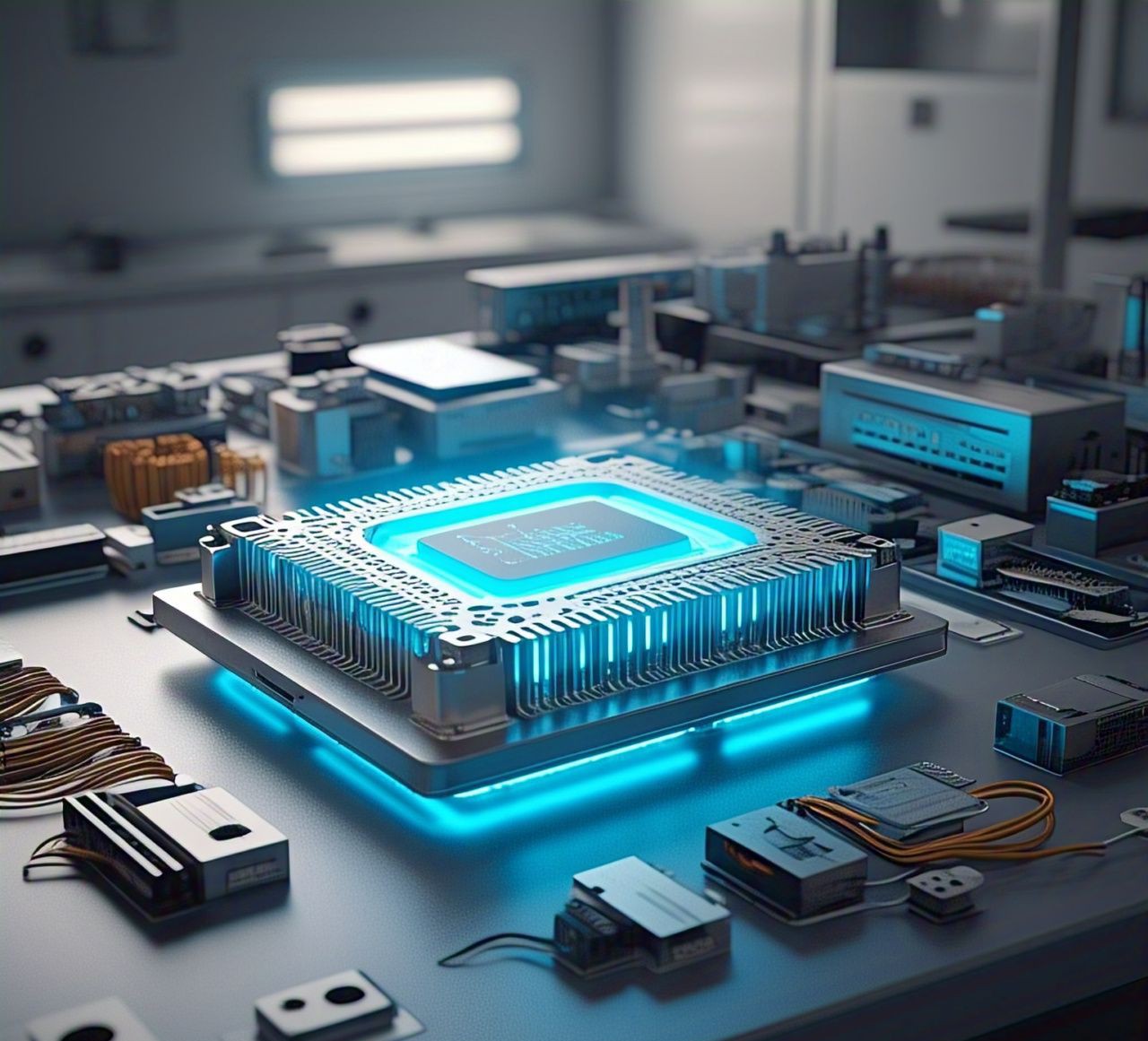
A semiconductor is a material that has electrical conductivity between that of a conductor and an insulator. Semiconductors are neither very good at conducting electricity (like copper) nor very good at insulating electricity (like glass).
Characteristics of Semiconductors
1. Variable conductivity: Semiconductors can change their conductivity in response to external factors like temperature, light, or voltage.
2. Neither conductor nor insulator: Semiconductors have a moderate level of conductivity, falling between conductors (like metals) and insulators (like glass or ceramics).
3. Sensitive to impurities: The presence of impurities or dopants can significantly alter the conductivity of semiconductors.
Types of Semiconductors
1. Elemental semiconductors: Made from single elements, like silicon (Si) or germanium (Ge).
2. Compound semiconductors: Composed of two or more elements, like gallium arsenide (GaAs) or indium phosphide (InP).
Applications of Semiconductors
1. Electronic devices: Semiconductors are used in a wide range of electronic devices, including computers, smartphones, and televisions.
2. Solar panels: Semiconductors are used to convert sunlight into electrical energy in solar panels.
3. Transistors: Semiconductors are used to make transistors, which amplify or switch electronic signals.
semiconductors are materials with unique electrical properties that make them essential for a wide range of electronic device
s and technologies.